
If you’re buying land to build a home, then there’s one step you can’t afford to skip: the perc test.
Short for “percolation test,” this soil test decides if your land can support a septic system. Without a passing result, you might not be legally allowed to build at all. Even if the property looks perfect.
This guide covers everything: what a perc test is, how it works, how much it costs, how to pass it, and why it’s important in most states.
What Is a Perc Test? (Soil Test for Land and Septic Systems)
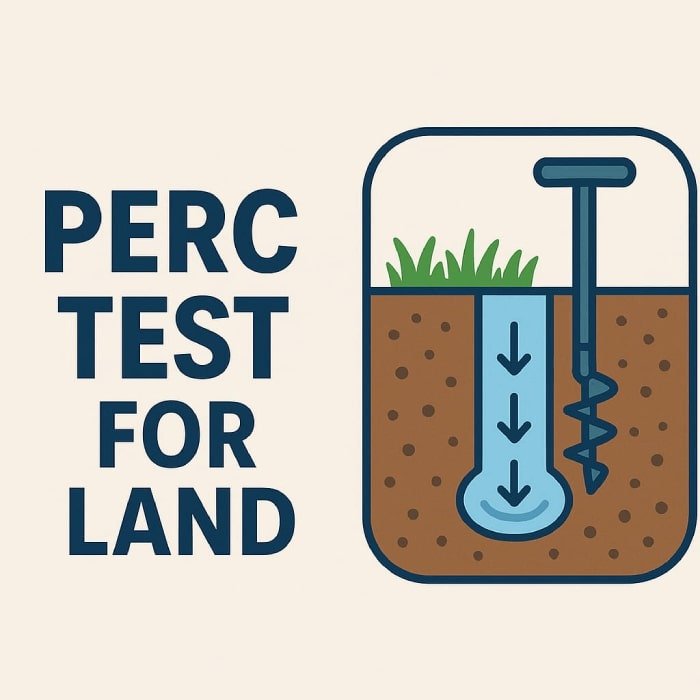
A perc test (short for percolation test) checks how quickly water drains through your soil. It’s one of the most important tests for land buyers, especially in rural areas with no city sewer access. A passing result means the land is suitable for installing a septic system.
But failing the test, on the other hand, can have major problems. You might be forced to install a costly engineered system, or not be able to build at all.
For example, if your soil drains too slowly, wastewater from a septic system might not absorb into the ground fast enough. This can lead to backups, standing water, and possible health hazards. All of these can delay or even cancel your building plans.
A perc test is a soil test that measures how quickly water drains into the ground to decide if a septic system can be safely installed on a property.
Who Performs a Perc Test?
A licensed professional should conduct a perc test. Depending on your state or country, this could be:
- A licensed soil engineer
- A septic system designer
- A local health or environmental official (some areas need their presence during testing)
The results are usually submitted as part of your septic system permit and should meet state or local health department standards.
How Much Does a Perc Test Cost in 2025?
| Item | Cost Range |
| Basic Perc Test | $300 – $1,500 |
| Follow-up Testing | $500 – $1,000 |
| Soil Engineer Report | $750 – $2,000 |
| Septic System Redesign | $1,000 – $3,000 |
Factors That Affect Price:
- Number of test holes
- Size and slope of the land
- Local permit requirements
- Type of soil and accessibility
- If a full soil profile analysis is needed
Pro Tip: A perc test may cost $1,000, but failing to do it can cost you $20,000+ in engineered septic systems.
How a Perc Test Works: Step-by-Step Process
- Site Selection
A professional identifies where the septic system could go. It’s usually downhill from the proposed house site.
- Digging Test Holes
Holes (usually 6-12 inches wide and 18-36 inches deep) are dug in the chosen area.
- Pre-Soaking (if required)
Some jurisdictions need to soak the holes with water overnight to simulate saturated soil.
- Measuring Drainage
Water is poured into the holes, and the drainage rate is measured in minutes per inch.
- Reporting the Results
The measured rates are compared to your local code. Too fast or too slow = fail.
Perc Test Requirements by State (Quick Overview)
Perc testing rules can change from state to state and often by county. Here are a few highlights:
- California: Usually restricted to wet season testing. It has to be done by a licensed civil engineer.
- Texas: Valid for 5 years. A county rep usually needs to observe the test.
- New York: Involves the Department of Health and can be tied to zoning rules.
- Florida: High water table assessments may be required.
- Washington State: Usually combined with a full site/soil evaluation.
Always check with your country’s health department or building office. Local rules can sometimes override state-level guidelines.
Related: What Is Land Development? Process, Costs, Types & Examples
What If the Land Fails the Perc Test?
A failed perc test doesn’t automatically mean the land is useless, but it does mean big decisions ahead.
You might need to:
- Install an engineered system like a mound or aerobic treatment unit.
- Move the septic system location elsewhere on the property.
- Redesign your building plans entirely.
- Back out of the sale if you included a perc test possibility in your offer.
Some areas will not issue any building permits without a passing perc test, even if you’re ready to invest in a high-end system.
How to Pass a Perc Test (or Improve Your Odds)
There’s no guaranteed way to “pass” a perc test, but you can improve your chances.
- Avoid compacting the soil before testing (no driving heavy vehicles).
- Test during dry conditions if your county allows it.
- Clear any vegetation, roots, or debris from the test area.
- Choose larger lots that allow flexibility in septic placement.
Tip: Even if one test site fails, another location on the lot might pass.
Options If You Fail the Perc Test
If your land fails the perc test, don’t panic. You may have workarounds:
- Mound System: A raised septic field using imported soil (costly and highly visible).
- Aerobic Treatment Unit: A powered system that breaks down waste faster, usually requiring maintenance contracts.
- Alternative Site Placement: Test another part of the property.
- Engineering Solution: Bring in a soil scientist or a civil engineer to design a custom system.
The solutions cost more, and even then, the approval isn’t guaranteed. Always consult your local agency before committing.
Final Take: Don’t Skip the Perc Test
A perc test is your first line of defence against costly surprises when buying land. It decides if you can build, where you can build, and how much it’s going to cost.
Before making an offer:
- Include a perc test possibility
- Know your local/state requirements
- Hire a licensed pro
- Understand your fallback options
The land may be looking like a dream, but bad soil can turn it all into a money pit.
Don’t risk losing thousands! Let us help you find a licensed pro who knows your local rules and can guide you from dirt to dream home.
